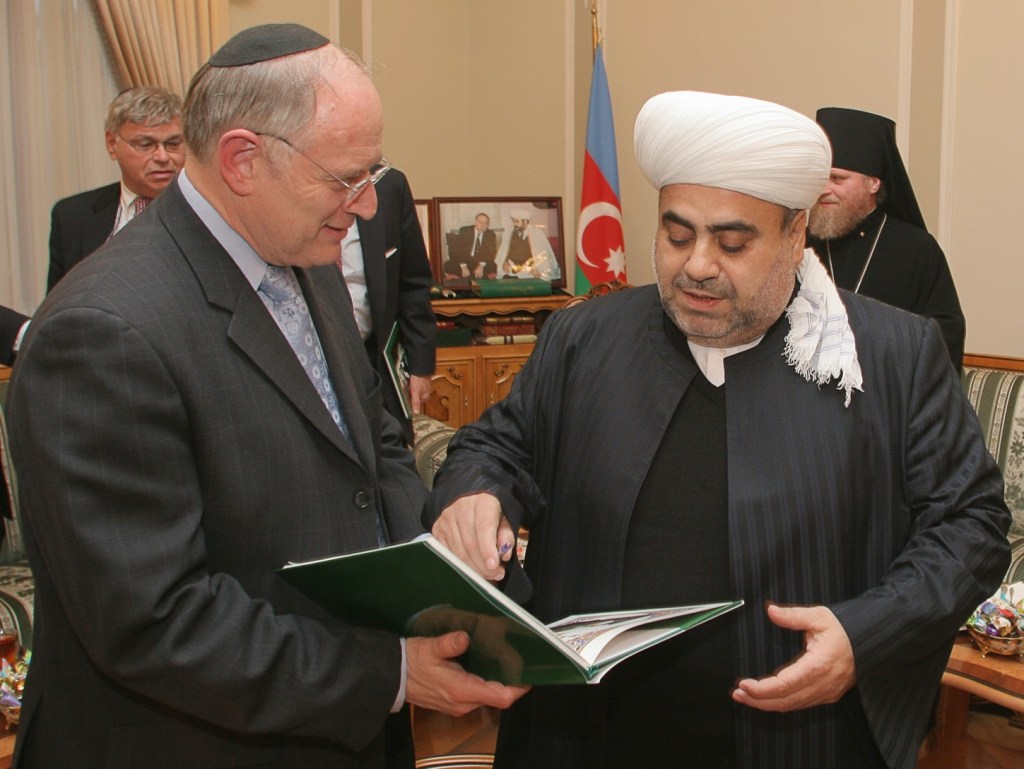
Hadiths are the sayings of the Prophet Muhammad (Peace and blessings of Allah be upon him) as well as the records of his actions. One of the most famous shorter collections of these sayings is the Forty Hadiths compiled by the well known scholar Imam al-Nawawi (born 631 H/1230 CE), who provided a brief commentary on each hadith. The following is excerpted from the English translation by Abdassamad Clarke. Emphases have been added:
From Abu Hamzah Anas ibn Malik, the servant of the Messenger of Allah [ﷺ], from the Prophet [ﷺ], that he said, “None of you believes until he loves for his brother what he loves for himself.” Imam al-Bukhari and Imam Muslim narrated it.
[Imam al-Nawawi comments:]
“With respect to his saying, “None of you believes until he loves for his brother what he loves for himself,” the first thing to be said is that it should be interpreted in terms of the universality of brotherhood even to the extent of encompassing disbelievers and Muslims . One loves for one’s disbelieving brother what one loves for oneself; his entrance into Islam, just as one loves for one’s Muslim brother his continuance in Islam. For this reason supplication for a disbeliever’s guidance is recommended. The hadith proves the incompleteness of the imān [belief] of whoever does not love for his brother what he loves for himself.
What is meant by ‘love’ is ‘willing good and benefit’, moreover what is meant is love in terms of the dīn and not human love, for human nature may dislike [another’s] attainment of good and another’s being distinguished over oneself. Man must oppose human nature, supplicate for his brother and wish for him that for which he himself wishes. If a person does not love for his brother what he loves for himself he is envious.”
[Source: Imam Yahya bin Sharaf al-Din al-Nawawī, The Complete Forty Hadith translated by Abdassamad Clarke, Ta-Ha Publishers, London, 2000, pp. 62-63]



 The Power of Narratives
Leave a comment